
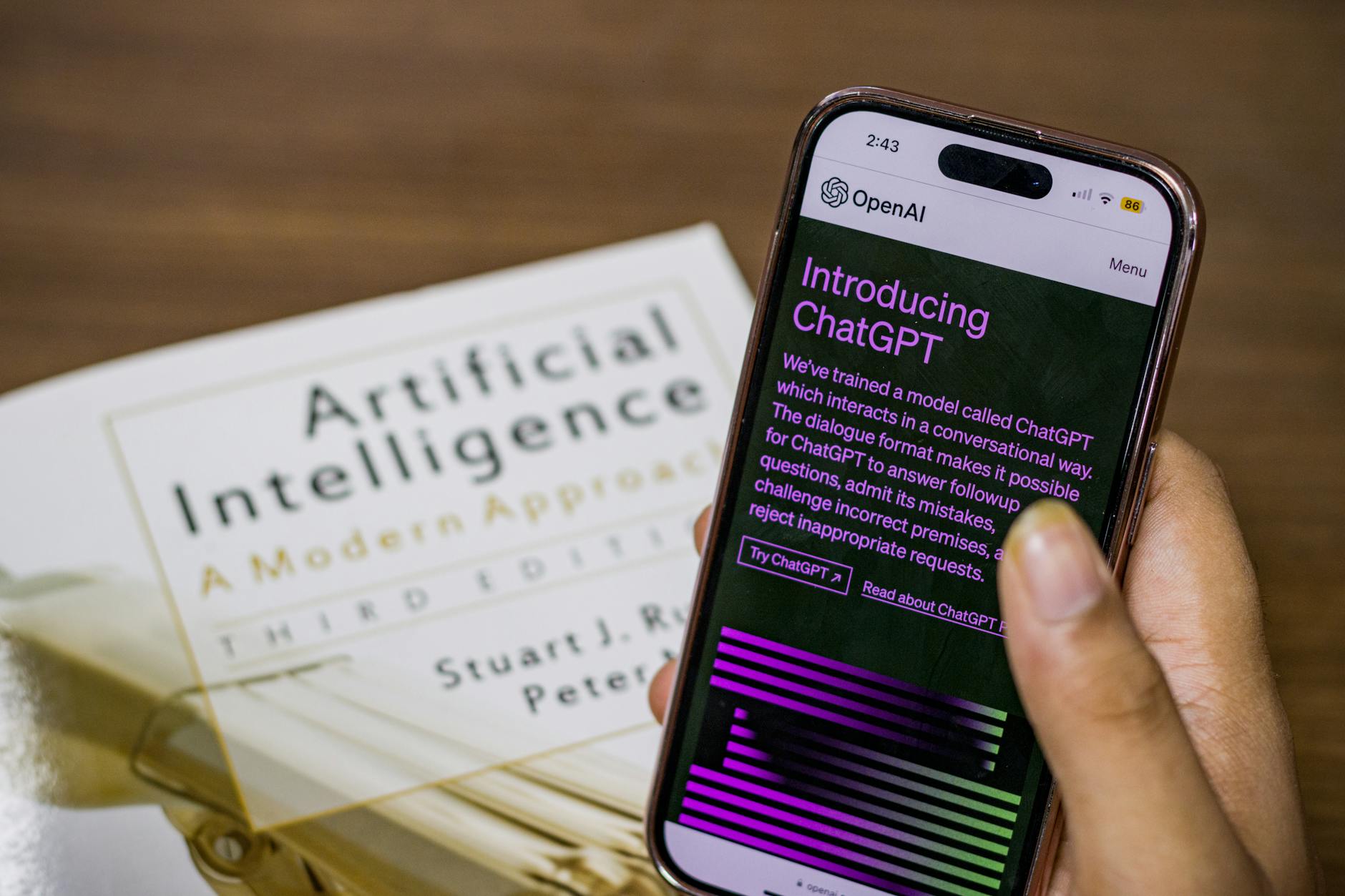
How ChatGPT actually decides which products and stores to mention
Before fixing anything, it helps to understand what ChatGPT is actually doing when someone asks it "where can I buy X?" or "what's the best Y for Z?" It is not running a live Google search. It is drawing on a combination of its training data (which has a knowledge cut-off), its web-browsing tool (available in some versions), and the structured signals it has learned to associate with trustworthy, relevant sources.
When ChatGPT does browse the web in real time, it tends to favour pages that are easy to parse, clearly structured, and signal their content type explicitly. When it is working from training data, it favours brands and pages that appeared frequently and authoritatively across the web before the cut-off. Either way, a store that has done nothing to make itself machine-readable is at a serious disadvantage.
This is the core problem most Shopify stores face. They look great to human visitors. They look almost invisible to AI systems.
Shopify's default schema is not enough
Shopify does generate some schema markup automatically. It adds basic Product schema to product pages and a bit of Organization data to your homepage. That sounds fine in theory. In practice, it is often incomplete, sometimes incorrect, and almost never sufficient for AI visibility.
Here is what Shopify's built-in schema typically leaves out:
- Aggregate review ratings on product pages (or it adds them inconsistently depending on the theme)
Brandinformation nested within the product schema- Detailed
Offerdata including availability, currency, and price validity dates - Collection-level
ItemListschema, so ChatGPT has no structured way to understand your product catalogue BreadcrumbListschema for site structure- Any content-level schema like
ArticleorFAQPageon your blog posts
ChatGPT and other AI engines need structured signals to understand what your store sells, who it is for, and why it is worth recommending. If those signals are missing or thin, your store simply does not register as a credible source of product information.
We looked at this in detail in our post on whether Shopify's built-in schema markup actually works for AI search, and the short answer is: not on its own.
Your store may not be crawlable by GPTBot
ChatGPT uses its own crawler, called GPTBot, to index web content. If your robots.txt file blocks GPTBot, or if your Cloudflare or firewall settings are blocking non-browser traffic, ChatGPT cannot read your store at all.
Check your robots.txt file by visiting yourstore.com/robots.txt. You are looking for any line that says:
User-agent: GPTBot
Disallow: /
If that is there, either you or a developer added it deliberately (possibly following some misguided security advice), or a Shopify app added it automatically. Either way, it is actively preventing ChatGPT from learning about your store.
Removing that block will not get you into ChatGPT overnight. Training data takes time to update. But it is a prerequisite. You cannot appear in AI recommendations if the AI cannot read your pages.
It is also worth knowing that GPTBot does not crawl the same way Googlebot does. It tends to prioritise pages that are well-linked, have clear structured data, and load cleanly without requiring JavaScript execution. Many Shopify stores rely heavily on JavaScript-rendered content, which GPTBot may not process correctly.
You have no authoritative content for AI to cite
ChatGPT tends to recommend brands and stores that appear as credible sources elsewhere on the web, not just on their own site. If your brand name appears in product roundups, review sites, Reddit threads, forum discussions, and third-party articles, AI systems learn to associate your brand with the relevant product category.
This is why big brands dominate AI recommendations even when smaller brands offer better products. The big brands have years of accumulated mentions, citations, and structured content pointing at them. A newer or smaller Shopify store might have a brilliant product and zero AI footprint.
The practical implication is that AI visibility is partly an on-site schema problem and partly an off-site authority problem. You need both. A technically perfect schema implementation will not help much if ChatGPT has never encountered your brand name in any context it found credible.
Some specific things that build AI authority for e-commerce brands:
- Being mentioned in product comparison articles on independent sites
- Appearing in Reddit discussions about your product category (genuine participation, not spam)
- Getting reviewed on platforms like Trustpilot or Google that AI systems recognise as authoritative signals
- Publishing genuinely useful content on your own blog that other sites link to or reference
- Being included in "best of" lists on niche editorial sites
Your product pages are not structured for AI comprehension
Even if GPTBot can crawl your store, individual product pages need to be structured in a way that makes them genuinely useful to AI systems. That means more than just having a product title and a price.
A well-optimised Shopify product page for AI visibility includes:
- Complete JSON-LD Product schema with name, description, brand, SKU, offers (price, currency, availability), and aggregate rating
- A clear, detailed product description that explains what the product does, who it is for, and why it is the right choice. Vague descriptions like "premium quality, fast delivery" tell AI nothing useful
- Specific use case language so ChatGPT can match your product to the right conversational query. If someone asks "what's the best moisturiser for dry skin in winter", your page needs to actually use that kind of language
- FAQPage schema on product pages, answering the questions your customers actually ask before buying
Think about it from the AI's perspective. It is trying to answer a specific question from a real person. It will cite the source that most directly and clearly answers that question. If your product page reads like a generic spec sheet, it will lose out to a competitor whose page reads like a helpful expert answer.
Adding proper JSON-LD schema to your product pages is straightforward with the right approach. Our guide on how to add product schema with reviews to a Shopify product page walks through the exact implementation.
Your collection pages are invisible to AI
Most Shopify stores have collection pages that list products by category. These pages are often some of the highest-traffic pages on the store, and they represent exactly the kind of grouped product information that AI systems would find useful when answering category-level questions like "where can I find sustainable activewear?"
Without ItemList schema on your collection pages, AI crawlers see a wall of product images and links with no structured context. With ItemList schema, you are telling AI: here is a curated list of products in this category, here are their names, URLs, and positions. That is the kind of signal that gets a collection page cited in response to a broad category question.
This is a genuinely underused tactic. Most Shopify stores, even well-optimised ones, have no ItemList schema anywhere.
What to actually fix first
If you are going to prioritise, here is a sensible order of operations:
- Check and fix your robots.txt to make sure GPTBot is not blocked
- Implement complete Product schema with reviews on your top 10 to 20 product pages
- Add ItemList schema to your most important collection pages
- Add FAQPage schema to product pages using real pre-purchase questions
- Improve your product descriptions to answer specific use-case questions, not just describe features
- Build off-site mentions through PR, genuine community participation, and content that earns links
None of this is a quick fix. AI visibility is a medium-term investment, much like traditional SEO was in 2010. The stores that start now will have a meaningful head start over those that wait until the space is more competitive.
If you want to understand where your store currently stands before making any changes, the free AI visibility audit at FlinnSchema is a good starting point. It looks at your schema implementation, crawlability, and content signals together, so you get a clear picture of what actually needs fixing rather than guessing.
For stores that want the implementation done properly without spending weeks in their theme code, FlinnSchema's automations handle the schema injection across product, collection, and blog pages automatically, with the correct structure for AI search engines, not just Google.
Frequently Asked Questions
How long does it take for my Shopify store to start appearing in ChatGPT recommendations after fixing my schema?
There is no fixed timeline, because it depends on how frequently GPTBot re-crawls your site, and how ChatGPT's browsing and training systems incorporate new data. For the browsing-enabled version of ChatGPT, improvements can show up within weeks if your pages are being crawled correctly. For changes reflected in ChatGPT's base training data, you are looking at months. This is why starting early matters.
Does having a Shopify SEO app mean my schema is already optimised for AI?
Not necessarily. Most Shopify SEO apps were built to improve Google rankings, and they optimise for Google's schema requirements, which are narrower than what AI search engines respond to. Some apps inject incomplete or outdated schema formats. It is worth checking what schema your current apps are actually outputting by using Google's Rich Results Test or Schema.org's validator, and comparing it against the full Product or ItemList specification.
Should I focus on ChatGPT specifically, or optimise for all AI search engines at once?
The good news is that the fundamentals overlap significantly. Clean JSON-LD schema, well-structured content, good crawlability, and off-site authority all improve your visibility across ChatGPT, Perplexity, Gemini, and others simultaneously. You do not need separate strategies for each. Focus on getting the basics right and you will benefit across the board.
My competitors are showing up in ChatGPT recommendations but I'm not. What are they doing differently?
Usually one or more of the following: they have more complete product schema, they have more off-site mentions and citations, their product descriptions more directly answer the kinds of questions people ask AI, or they have been publishing useful content that AI systems have learned to treat as authoritative. It is worth looking at their schema output using a browser extension like Detailed or a validator tool, and comparing their product page copy against yours. The differences are often more obvious than you expect.